Ask me what website development in Kraków costs and my first question back is: who walks through your door? There isn't one Kraków. There are two, and they want completely different websites. Almost every client I take on belongs to the first - the tourist one. Hotels, restaurants, tour operators, guides. The kind of business whose site has to take a booking from someone in Tel Aviv at 2am, read cleanly in four languages, and not fall over in July.
There are two Krakóws: tourist and corporate - your site depends on which you serve
The corporate Kraków is the one that makes the headlines. Cisco, Motorola, Shell, HSBC, ABB, Aptiv - they all parked back offices here, and that ecosystem sets the local idea of what software is supposed to cost, at London and Frankfurt day rates.
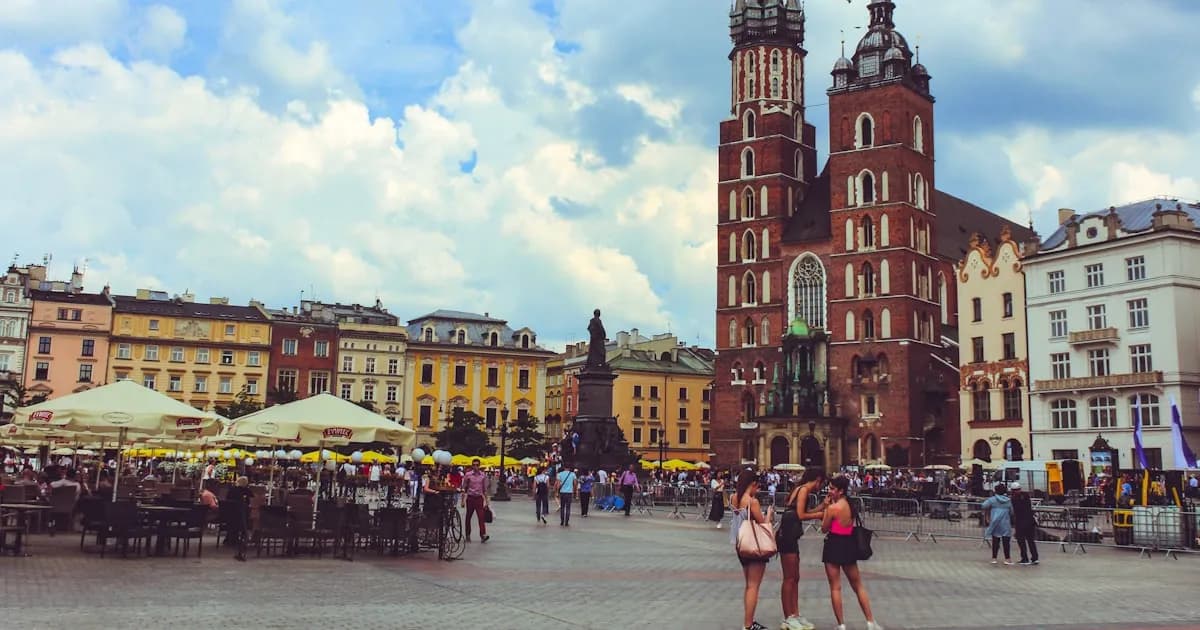
The tourist Kraków is the one with the customers. Fourteen-odd million visitors a year sleep in apartments off Floriańska, eat in Kazimierz, book a Wieliczka or Auschwitz day trip from a phone before they've landed. The businesses serving them are small - four-room hotels, single-location restaurants, two-person tour outfits - and they're the ones who actually need a site that does work.
The collision is the problem. A guesthouse asks a Kraków software house for a quote and the number comes back priced against the corporate market: an account manager, a designer, a project lead, and a junior dev fresh out of AGH writing the code while a senior signs off and bills senior. You don't need an enterprise delivery team. You need a site that takes bookings and someone who answers the phone. So figure out which Kraków you're in first - if you sell to visitors, the rest of this is for you.
Sites for tourism, hospitality and gastronomy
A tourism site has one job most company sites never face: convert a stranger who found you ninety seconds ago and has no reason to trust you.
A logistics firm can get away with a brochure. A hotel can't - the booking has to be three taps from the homepage, the price visible without a phone call, the photos real and not stock shots of a generic lobby. Spend on the photographer before the design: a guest decides on the room photos, checks the price, then books.
For restaurants the menu is the website. Someone on a Kazimierz street corner is searching your name to see the menu and find out if you're open right now. If that menu is a PDF that won't open on a phone, you've lost them to the place next door whose menu loads instantly. I build menus as real HTML - fast, and something Google and the AI assistants can parse and quote when someone asks "where can I eat near the Rynek tonight." Tour operators have their own twist: a widget that shows live availability, takes a deposit, and emails a confirmation in the customer's language beats any visual flourish.
All of it has to survive a phone on bad signal - most of your traffic is mobile, often from a stone courtyard near Wawel where the bars drop to one. A heavy site that needs a strong connection to render loses the booking right there.
Seasonality and bookings: a site that survives peak season
Kraków tourism isn't flat, and your site has to handle the spike without you babysitting it. The rhythm is brutal and predictable: quiet from January to March, a long ramp through spring, then June to August when the Old Town is shoulder to shoulder and a popular restaurant's site sees more visits in one July weekend than across all of February. If the booking flow only ever gets tested at low traffic and quietly breaks under load, you find out at the worst possible moment.
This is where the build choice stops being abstract. A static, pre-rendered site doesn't care whether ten people or ten thousand hit it in an hour - there's no per-visit database query to choke on. The spike that would bring a plugin-stuffed dynamic site to its knees is a non-event. For a business whose whole year leans on three months, that's not a nice-to-have.
The other trap is timing. Tourism clients want the site live for the season, go silent in February when I need copy and photos, then panic in May. The Kazimierz restaurant I worked with last year is the cautionary tale: a two-week build stretched to five because the menu, the food photos, and the English copy were all stuck waiting on a photographer and a translator - and we launched after the early-season traffic had already gone. Book the work in winter, launch in spring, let the site earn through summer.
What it costs
Real ranges, no "it depends" cop-out:
- Landing page (one page, one goal): €400-900. A single page for one tour, one apartment, one event. Fast to build, fast to rank when the niche is thin.
- Hospitality / company site (5-15 pages): €900-3,000. Home, rooms or menu, about, contact, the booking path. What most small Kraków tourism businesses actually buy.
- Custom design + technical SEO + multilingual: €3,000-5,000+. When you're selling to an international audience in three or four languages and the site has to convert, not just exist. For most hospitality clients this is the bracket that earns its money back.
- Online store / booking system: €2,500-8,000. A booking engine with live availability, deposits, and payments, or a real shop. In a tourism city this is half the local market.
The corporate-rate trap is the thing to watch. The same booking site quoted by a software house that mostly sells to multinationals can run two to three times higher - you're paying for the office and the org chart, not better code. A guesthouse paying those rates for a brochure site is the most common overspend I see here. The money belongs in the booking flow, real technical SEO, and language done properly - not the hero video of the Wawel skyline.
Multilingual for tourists - not just PL/EN
Most Kraków sites that bother with languages stop at Polish and English. For a tourism business that's leaving money on the table. Look at who's actually landing on the page: a huge German and British contingent every summer, a large permanent Ukrainian population, Israeli visitors around the memorial sites, the international student body across UJ and AGH. English is the floor, not the goal. German and Ukrainian frequently pay for themselves - I've added them to hotel and tour sites where the owner could see in the analytics exactly which language was converting.
The mistake is treating translation as a switch you flip after launch. Done that way it's machine-translated mush with the usual hreflang errors, and Google serves the wrong language to the wrong visitor. Done right, each language is a properly indexed version with clean hreflang tags, native copy, and prices and dates formatted the way that audience reads them. That's a build decision made at the start - and consistently the highest-ROI line on the quote, and the first one clients try to cut.
To see how the multilingual side fits into a full project, see the website development service.
Real-world case: a medical-tourism dental clinic in Kraków
Kraków doesn't only draw people for Wawel - they fly in to fix their teeth, because the prices are a fraction of Germany or Britain and the quality holds up. A clinic in exactly that segment came to me with the classic problem. The site was Polish and English, the English machine-made, and the patients were coming mostly from Germany, Britain, and the local Ukrainian community. A foreigner would land, see generic phrases and no prices, have no idea what a turnkey implant would actually cost, and leave for a competitor who laid out the price and the process like a human being. On top of that the site was slow, and the only way to get in touch was a form that dropped silently to email and sometimes got lost.
What I built: a new Next.js site, static, fast on mobile, with LCP around a second. Four language versions on separate URLs with hreflang - PL, EN, DE, UA - properly translated, forms and confirmation emails included, not run through an auto-plugin. A dedicated landing page for each key search, with a plain description of the procedure, a price guide in euros, how long the trip takes, and answers to the things a foreign patient actually worries about: guarantees, how many visits, how the logistics work. Inquiries were set to copy straight to the coordinator's messenger - a patient writing in the evening from another time zone needs a quick reply.
First three months: inquiries from foreign patients were up about 50%, and their quality rose too - people arrived already understanding the price and the process, so the coordinator wasn't explaining the basics from zero every time. The German version, which effectively hadn't existed before, brought its own stream of patients. The fast load helped in search as well: on English-language queries the site climbed noticeably. The project came in at six weeks, most of that spent on the procedure copy and having the translations proofed by native speakers.
Same lesson as the tourism side: if your customer is a foreigner, the site has to speak their language, show the price, and load instantly, or they go to whoever already does that.
How long it takes and how I work
A landing page takes 1-2 weeks, a 5-15 page hospitality site 2-4 weeks, a booking system or store 4-8 weeks. Anyone promising a "professional website in 48 hours" is swapping photos into a template. The delay is never the code; it's content - the room photos, the final menu, the copy in every language. Get those ready before kickoff and you launch before the season turns.
I'm an independent developer, not an agency, so you talk to the person writing the code:
- Discovery call (30 min). Who the site is for, who you compete with, what should set you apart - before I ask about budget.
- Fixed quote with a start date. Locked before kickoff. No add-ons nobody mentioned.
- Build in 2-4 weeks. Static, multilingual where you need it, booking flow that survives July, SEO in the foundations.
- 30 days of post-launch fixes, plus full access and docs. Domain and hosting on your accounts. The site is yours, not a hostage on someone else's server.
Rates start below local software-house level, because you're paying for one developer who builds the thing - not an office billing against corporate budgets.
FAQ
How much does a website for a Kraków hotel or restaurant cost? A hospitality site with a booking path runs €900-3,000, and a custom multilingual build with a real booking system runs €3,000-5,000 or more. A landing page for one tour or apartment starts around €400. The same project from a Kraków software house that sells mostly to corporates often costs two to three times as much - agency overhead, not better code.
Do I really need more than Polish and English on a Kraków tourism site? Often yes. Kraków draws large German and British summer crowds, a permanent Ukrainian population, Israeli visitors around the memorial sites, and an international student body. English is the minimum; German or Ukrainian frequently pay for themselves - check your booking analytics by language to see which earns its place.
Will my site survive the July booking spike? It will if it's built static and pre-rendered, because there's no per-visit database query to choke under load - ten thousand visitors in an hour is a non-event. Plugin-heavy dynamic sites are the ones that fall over exactly when a popular Old Town restaurant gets its heaviest traffic.
When should I start building if I want the site live for the season? Start in winter. January to March is quiet for tourism, which is exactly when you have time to gather photos, finalize the menu, and approve copy in each language. Leave it to May and you risk launching after the early traffic has already gone.
Why do food photos and a fast menu matter so much for a Kraków restaurant? Because the customer is standing on a Kazimierz street searching your name to see the menu and whether you're open. If it's a PDF that won't open on a phone or a blurry chalkboard photo, they tap the place next door. A menu built as fast, real HTML loads instantly and can be quoted by Google and AI assistants when someone asks where to eat near the Rynek.
Running a Kraków hotel, restaurant, or tour business and want a site that takes bookings in every language your guests speak? Book a 30-minute call - tell me about the project, and within 24 hours you'll have a fixed quote with a start date.