A freight forwarder near the DCT container terminal asked me last spring why his new site wasn't pulling inquiries from Gdynia. It ranked fine, but only for "freight forwarder Gdańsk." Problem was, half his customers don't think of themselves as being in Gdańsk at all. They're in Gdynia, or Sopot, or some logistics park on the edge of the three cities that blur together along the bay. He'd built a Gdańsk website for a Tricity business. That's the mistake I see most here, and it's the thing nobody quotes you on.
I build sites for businesses across Gdańsk, Sopot, and Gdynia. Below is the real shape of the work: the geography that breaks normal local SEO, the two industries that dominate what I get asked for, and what it costs in actual euros.
You're not targeting Gdańsk - you're targeting the Tricity
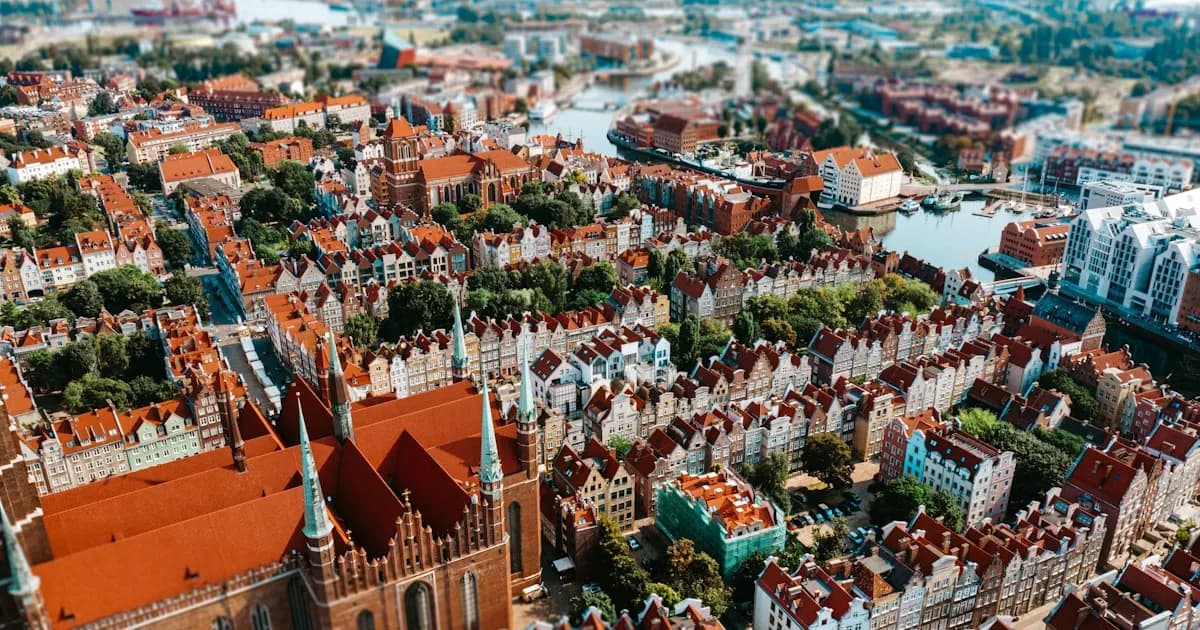
Gdańsk, Sopot, and Gdynia run together into one continuous strip of about a million people, tied into a single commute by the SKM train. People live in one, work in another, shop in the third. In daily life there barely is a city line. A business in Kraków markets to a city. You're marketing to a region locals call Trójmiasto and treat as one place, but Google still indexes each city separately, and so do the people typing into the box.
So the freight forwarder wasn't wrong to rank for Gdańsk. He was wrong to stop there. His customers were searching Gdynia and Trójmiasto, and his site said nothing in either word. Fixing that took an afternoon. The Gdynia inquiries started inside a month.
What the Tricity (Gdańsk, Sopot, Gdynia) means for your SEO
Here's the direct version, because people ask it plainly: target all three cities plus the regional term, not just the one your office sits in. The phrasing that works is "freight forwarding Trójmiasto," "hotel Sopot," "marine services Gdynia" (the words people actually type), woven into real page copy, not stuffed into a footer.
That sounds obvious until you see how most sites handle it. They pick the city on their registration documents and ignore the other two. A spa in Sopot ranks beautifully for "spa Sopot" and is invisible to the larger pool of people searching "spa Trójmiasto" or "spa Gdańsk" while standing on the Sopot pier.
A few things that actually move the needle here:
- A location page per city you genuinely serve. Not three thin doorway pages, which Google penalizes, rightly. One real page each: the Gdynia office, the service area, why a Gdynia client would care, with its own
LocalBusinessschema and the correct address. - Trójmiasto in the copy, not just the cities. It's the highest-volume term locals use and the one most foreign-built sites miss entirely, because the word doesn't translate and an outside developer never learns it.
- The transit reality. People search on the move, on the SKM platform or walking the Gdynia waterfront. That traffic is mobile and often on a weak signal. A one-second site wins it; a heavy one loses it before the first line appears.
If you only serve one of the three cities, focus there. But most Tricity businesses serve at least two, and they're leaving the second on the table.
A site for a logistics/freight firm vs a seaside business
Almost everything I build here falls into one of two buckets, and they want opposite things from a website.
Logistics and freight forwarding. Gdańsk runs the largest container terminal on the Baltic, and around it sits a dense cluster of forwarders, customs agents, and shipping lines. Serious B2B, often quoting clients in Hamburg, Rotterdam, or Shanghai. Their inquiries arrive at strange hours, because the other end of the deal is in a different time zone. A forwarder showed me his form submissions once: a real chunk landed between 11pm and 4am local, from Asia. The site has to sell while he sleeps. That means English a professional wrote (not machine-translated), a clear capabilities page, and credibility signals like licenses, certifications, the terminals you work with. No booking widget, no seasonal banner. A calm, fast, trustworthy site that a logistics manager abroad reads at midnight and decides to email.
Seaside hospitality and tourism. Completely different animal. A Sopot seafront hotel, a guesthouse in the old town, a tour operator running boats to Westerplatte or Hel. These live and die on bookings, and the year splits in two: slammed June to August, near-empty in winter. The site's whole job is turning a phone-in-hand visitor into a confirmed booking in three taps, with fast photos, prices that don't hide, and a flow that works on one bar of signal on the beach. Where the forwarder wants gravitas, the hotel wants speed and a clear "book now."
Same developer, same stack, two genuinely different products. If someone quotes you the identical site for both, they don't understand the work.
What it costs
Real EUR ranges, no "it depends":
- Landing page (one page, one goal): €400-900. A summer-booking page for a hotel, a single Westerplatte boat tour. Fast to build, fast to rank when the niche is thin.
- Company site (5-15 pages): €900-3,000. Home, services, about, contact, blog. This is what most Tricity service businesses buy: a freight forwarder, a customs agent, a marine supplier.
- Multilingual B2B site (PL/EN, sometimes DE): €2,500-5,000+. The standard for logistics firms selling internationally. Translation that reads native is most of the value, and most of the cost.
- Booking-driven or e-commerce: €2,500-8,000. A real booking flow with payments, or a store: an amber shop near the Crane shipping worldwide, a maritime-parts catalogue.
The trap is overhead. Gdańsk turned into a serious tech city. Intel runs a large engineering office, Asseco is headquartered here, and the Olivia Centre is full of software houses billing at corporate rates. The same project from one of those can run two to three times what an independent charges, because you're paying for an office, a project manager, and a sales rep on top of the code. A ten-person forwarder by the port doesn't need that. You need someone who builds the thing and picks up the phone when it breaks.
Seaside season: performance and bookings
This is the part unique to a coastal market, and it catches hospitality clients every year.
Your traffic isn't steady. It spikes hard in July, when a family on Brzeźno beach decides at 2pm to find a hotel for tonight, on a phone, on a signal the crowd is choking. If your booking page takes four seconds to load, they've tapped the next result. On a guesthouse site I watched the peak-season bounce rate on slow mobile pages. Brutal. And every one of those was a booking that went to a competitor whose site was lighter.
So for a seaside business, performance isn't a nice-to-have, it's the revenue. Green Core Web Vitals on a mid-range phone over a weak connection. A booking flow that survives one bar of signal.
There's a budgeting trap with the season too. A lot of operators commission a flashy new microsite every summer, then let it rot in winter. Don't. Build one good site that ranks year-round, and use the quiet off-season to feed it content. A microsite that launches in May has no history and no authority. It competes against your own ghost from last year.
Real-world case: a guesthouse by the sea in Sopot
A ten-room guesthouse a short walk from the Sopot pier came to me with a slow, heavy WordPress site. It took five or six seconds to load on a phone, the room gallery served photos at a couple of megabytes each, and it spoke exactly two languages - Polish, and clumsy English through an auto-translate plugin. In summer, by the owner's own account, half the visits bounced before they'd even seen the rooms. The Germans and Scandinavians who pour into Sopot hit the broken translation and left for Booking.com, where the owner was also handing over a commission on every night.
I built a new site on Next.js, statically rendered - pages pre-built, images in WebP and lazy-loaded. Mobile LCP dropped to under a second against the old five-plus. Four real language versions - PL, EN, DE, UA - each on its own URL with proper hreflang, not a translate button, and it wasn't just the marketing copy that got translated but the booking form and the confirmation emails too. I wired the booking so an inquiry lands in the owner's Telegram the moment it comes in; a guest in another time zone isn't going to wait for "good morning."
First season: conversion to an inquiry rose by about 45%, direct bookings climbed noticeably, and a chunk of traffic came off Booking.com, commission saved. The German traffic that used to bounce started reaching the booking step, so the DE version paid for itself. Speed did double duty: guests stopped leaving on load, and Google nudged the site higher in local results. The whole thing fit into four weeks.
The moral is simple. For a seaside business, speed and a genuinely multilingual site aren't about looking nice, they're rooms actually booked.
How long it takes and how I work remotely
A landing page takes 1-2 weeks. A 5-15 page company site, 2-4 weeks. A booking or e-commerce build, 4-8 weeks. Anyone promising a "professional website in three days" is swapping photos into a template, with no SEO foundation and nothing built to rank.
The delay is almost never the code. It's content: your copy, your photos, your service descriptions. With seaside clients there's a second, predictable trap. They go silent in February, then panic in May wanting the site live for June. Get the text ready before kickoff and you launch on schedule.
I work fully remote, which in the Tricity matters less than people fear. The discovery call is 30 minutes over video. You get a fixed quote with a start date, no add-ons nobody mentioned. I build for speed and clean HTML, multilingual where the work needs it, SEO in the foundations rather than bolted on after. Thirty days of post-launch fixes, full access, and the domain and hosting on your accounts. The site is yours, not a hostage to my server. For the full scope and example builds, see the website development service.
FAQ
Should my Tricity website target Gdańsk, Sopot, and Gdynia separately or as one region?
Both. Use the regional term "Trójmiasto" in your copy because that's what locals search, and build a real location page for each city you genuinely serve, with its own address and LocalBusiness schema. Don't create thin near-duplicate pages for cities you don't work in, because Google treats those as doorway pages and can penalize them.
My freight forwarding clients are international - does the site really need English? Yes, and it needs English a native speaker wrote, not a machine translation. Port inquiries often come from Hamburg, Rotterdam, or Asia, and a real share land overnight while you sleep. A clear, credible English site closes those leads without you in the room, where capabilities, certifications, and the terminals you work with matter more than design polish.
Why does my seaside business need a fast website specifically? Because peak-season bookings happen on a phone outdoors on a crowded signal, like a family on Sopot beach deciding where to stay tonight. A page that takes four seconds to load loses them before any text appears. Green Core Web Vitals on a mid-range phone over a weak connection is the difference between a booking and a bounce in July.
Should I commission a new microsite every summer for the tourist season? No. A microsite launched in May has no ranking history and competes against last year's version of itself with zero authority. Build one site that ranks year-round and use the quiet winter to add content. Rankings compound, and a fresh microsite throws away everything the previous one earned.
Why is a Gdańsk site cheaper from me than from an Olivia Centre software house? Because you're paying one developer who writes the code, not an office, a project manager, and a sales team on top. Gdańsk's tech boom (Intel, Asseco, the Olivia software houses) pushed local agency rates up, so the same project can cost two to three times more there. For a ten-person forwarder or a seaside hotel, that overhead buys nothing the site needs.
Building a site for a Gdańsk, Sopot, or Gdynia business and want a developer who won't vanish halfway? Book a 30-minute call. Tell me about the project, and within 24 hours you'll have a fixed quote with a start date.