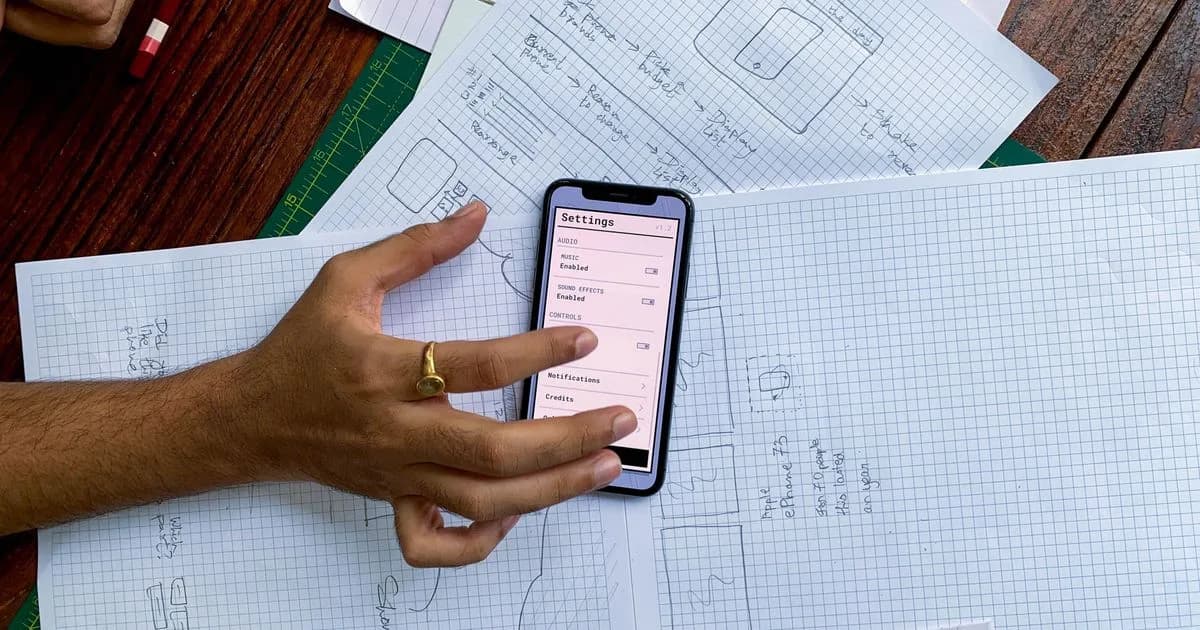
A working mobile app for a Kraków business or startup costs between €4,000 and €15,000+, and a real MVP - one you can put in front of users and investors - takes 4 to 8 weeks. That's the honest range for 2026. If someone quotes you €1,500 for "an app," they're handing you a website wrapped in an app icon.
I build iOS and Android apps for founders and companies across Poland, and Kraków is its own market. Different from Warsaw, different pressures, different ways people overpay. Here's how mobile app development actually works in this city: what it costs, how long it takes, and where the money quietly leaks out.
Why Kraków distorts your app budget
Kraków is the second-largest tech employer in Poland and the country's outsourcing capital. Capgemini, Cisco, IBM, ABB, Shell, State Street, HSBC: they all run big delivery centers here, and they've been hiring out of AGH and UJ for two decades. That's the catch.
All that BPO and SSC demand pushed local developer salaries up. A senior engineer who could build your app is often already sitting in a corporate tower in Zabłocie or near Rondo Mogilskie, drawing a comfortable PLN salary with full corporate benefits on top. So the local freelance pool that's both senior and available is thinner than the headcount numbers suggest, and it prices accordingly.
The result: Kraków rates sit close to Warsaw's, sometimes higher for the genuinely scarce specialists, and noticeably above Wrocław or Łódź. You're paying for a deep talent market that's mostly spoken for.
What an app actually costs here
A senior mobile developer in Kraków bills roughly €35-€60 per hour direct, or €55-€95 per hour through a software house, where you're funding a PM, designer, QA and account manager on top of the code. In złoty, a typical project lands around 17,000-65,000 zł end to end.
Broken into the three buckets people actually buy:
Simple app - €4,000-€6,000
Login, a handful of screens, a clean API, push notifications. Think a booking app for a yoga studio in Kazimierz, an internal tool for a logistics firm off Wielicka, or a single-purpose consumer app. Four to six weeks of work.
Mid-complexity MVP - €6,000-€12,000
Payments, user accounts, real-time data, three or four integrations, an admin dashboard. This is where most funded Kraków startups land for a first serious release - enough product to test the market and raise the next round.
Complex product - €15,000+
Marketplace logic, in-app chat, geolocation, offline sync, a heavy backend, multiple user roles. A tourism platform routing tens of thousands of visitors through Stare Miasto in July sits in this tier. So does anything with gaming-grade interactivity, and Kraków has plenty of that talent around from the game studios that grew up here.
React Native vs native - the decision that moves your budget most
For 80-90% of business apps, the answer is React Native: one codebase in TypeScript, shipping to both iOS and Android. It's my default for Kraków clients, and here's the unglamorous reason. Most apps in this city aren't pushing the hardware.
A restaurant chain wants a menu, table booking, a loyalty card, and push offers. A boutique hotel wants check-in details, a digital concierge, and a "things to do nearby" feed. A SaaS startup wants a clean mobile companion to its web product. None of that needs native.
What native (Swift for iOS, Kotlin for Android: two codebases, two skill sets, roughly double the cost) actually earns its price:
- Games and heavy 3D or AR.
- Apps leaning hard on the camera, sensors, Bluetooth, or background location.
- Anything where you genuinely need every last millisecond of frame time.
Cross-platform covers everything else at 30-60% less cost than building two native apps and maintaining both. So if a developer reaches for native without first asking what your app does, they're optimizing for their own comfort, not your runway. I once watched a tourism startup pay for a native iOS build, then discover six months later they needed Android too. The whole thing had to be rebuilt. One codebase from the start would have saved them a full quarter and most of a seed round.
The MVP timeline: 4 to 8 weeks, honestly
Here's what those weeks look like for a real mid-complexity MVP:
- Week 1: scope locked, screens designed, backend architecture decided. No code yet, and that's deliberate.
- Weeks 2-5: the build. Auth, the core feature, payments or integrations, the admin side.
- Weeks 6-7: QA on real devices, polish, edge cases, the unglamorous bug grind.
- Week 8: store submission and launch.
Anyone promising a finished, store-published app "in two weeks" is selling a no-code wrapper or a template with your logo dropped on top. That can be a fine way to test an idea cheaply. Just know that's what you're buying, and that you'll rebuild it the moment it gets traction.
And budget for the stores. Google Play review is usually a day or two. Apple ranges from a few hours to a week, and first-time submissions get bounced for small policy reasons constantly: a missing privacy label, a login the reviewer can't get past, a screenshot that breaks their rules. A developer who's shipped before plans for this. One who hasn't gets surprised, on your clock.
App Store and Google Play - what publishing involves
Publishing isn't a button. Apple charges $99 a year for a developer account; Google charges $25 once. You pay those directly, and the app should go live under your accounts, not the developer's. That's non-negotiable. If it ships under their account, you don't really own your own product.
Then there's the work around it: store listings in the right languages (for Kraków, usually English and Polish, often Ukrainian too given how large the Ukrainian community here is now), screenshots, the privacy questionnaire, App Tracking Transparency, and handling the inevitable first rejection. A good quote folds all of this in. Always confirm it does before you sign.
Where Kraków businesses overpay
Three patterns, over and over.
Paying a corporate software house for a startup MVP. The big local agencies are excellent, and priced for enterprise clients with enterprise budgets. A four-person team with a PM and a designer on a simple loyalty app means you're funding a process you don't need yet. For a first release, a senior freelancer who owns the whole thing end to end is 25-40% cheaper for the same result.
Building native "to be safe." Covered above. It's the single most expensive wrong turn, and it's usually made on a hunch, not a requirement.
Skipping the discovery conversation. A restaurant chain near Rynek once asked me for "an app like the one McDonald's has." Two questions in, what they actually needed was a loyalty card and push offers: a quarter of the budget they'd braced for. The expensive version exists because nobody asked what the app was for.
I build cross-platform apps in React Native, with a proper backend, published under your accounts, store submission handled, and a fixed price agreed before a single line of code is written. If you want the full scope and examples, see the mobile app development service.
Real-world case: a coffee chain on Kazimierz
A small Kraków coffee chain came to me - four spots on Kazimierz and in the center. They ran loyalty on paper punch cards: customers lost them, staff got confused, zero data. They wanted their own app with points and push offers but were afraid it meant half a year and tens of thousands of euros.
What we did. I took React Native on Expo to ship iOS and Android from one codebase. The MVP held only what tested the idea: registration, a digital points card, QR scanning at the register, push offers, and a simple backend for the bonuses. Payments and takeaway ordering were deliberately pushed to a second version so the first release stayed lean.
The result: we reached a TestFlight build and an internal test with the baristas in five weeks, plus another week for Apple review and publishing to both stores. In the first month around 1,200 regulars installed the app, and repeat visits on the loyalty program rose about 30% - people came back for points instead of a lost bit of cardboard. We landed in the lower half of the range because we didn't wade into payments at the start.
That's what a sensible Kraków MVP looks like: one hypothesis, React Native, a live release in six weeks, not endless development of the perfect app.
FAQ
How much does mobile app development cost in Kraków? A complete cross-platform app typically costs €4,000-€15,000+, or roughly 17,000-65,000 zł, depending on the number of screens, integrations and backend complexity. A senior developer bills €35-€60 per hour direct, or €55-€95 through a software house. Kraków rates sit close to Warsaw's because the local talent market is deep but heavily booked by corporate employers.
How long does it take to build an MVP in Kraków? A real mid-complexity MVP takes 4 to 8 weeks: about a week of scope and design, three to four weeks of building, then QA and store submission. Add time for App Store and Google Play review, since Apple often rejects first submissions over small policy issues.
Should I choose React Native or native for my Kraków app? For most business apps - restaurant, hotel, loyalty, tourism, SaaS companion - React Native is the better choice: one codebase for iOS and Android at 30-60% less cost than two native apps. Go native only for games, heavy AR, or apps that depend on device hardware and sensors.
Why are Kraków developer rates so high? Kraków is Poland's biggest outsourcing and SSC hub, with Capgemini, Cisco, IBM and others hiring senior engineers straight out of AGH and UJ. That corporate demand pushes salaries up and thins the available freelance pool, so local rates land close to Warsaw's and above smaller Polish cities.
Do I own the app and the App Store accounts? Yes - you should, always. The app must be published under your own Apple and Google developer accounts so you own the listing, the reviews and the freedom to change developers later. If a developer wants to publish under their own account, treat it as a serious red flag.
Got an app idea and want a straight answer on cost and timeline? Book a 30-minute call and within a day you'll have a fixed quote, a recommended stack, and a realistic start date - no vague hourly estimates.