Short answer: Google Ads catches existing demand, Meta Ads creates new demand. If your customers already type "divorce lawyer Warsaw" into search, start with Google. If you sell something people don't search for but will want once they see it (jewelry, a course, a new service) — start with Meta.
Everything else is detail on that one difference. Let's go through it so you don't burn your first €500 on a test that proves nothing.
Intent vs Interest: the real difference
This isn't "search vs social." It's intent vs interest.
On Google, the person already knows what they want and is actively looking. You intercept them at the moment of readiness. Leads cost more per click but run "warmer" — closer to a purchase.
On Meta, the person is scrolling a feed and asked for nothing. You interrupt them with an image or video and create desire from zero. Clicks are cheaper, but the person is "colder" — they just learned you exist.
Every other difference grows from this: price, sales cycle, creative demands, and how you measure results.
Channel comparison
| Channel | Best for | Typical cost per lead | When to use |
|---|---|---|---|
| Google Ads (Search) | On-demand services, B2B, local intent, "need it now" | €25–80 (higher in legal/medical/finance) | People already search for what you sell |
| Meta Ads (FB/IG) | E-commerce, visual and impulse products, new products, low-ticket | €8–30 | No search demand exists — you must create it |
| Google PMax / Shopping | Online stores with a product feed | €10–35 | You have a catalog and want sales, not clicks |
| Meta + retargeting | Closing people who already visited the site | €5–15 | You have traffic but few conversions |
Numbers are a benchmark for the 2026 European market. In legal, medical, and B2B software, a Google lead easily runs €100+. In low-ticket e-commerce, a Meta lead can fall under €5.
Why "cheap leads" are a trap
The most expensive mistake small businesses make is picking a channel by cost per lead. You should compare cost per customer, not cost per lead.
Simple math:
- Meta: €15 lead, 4% close rate → customer costs €375.
- Google: €60 lead, 14% close rate → customer costs €428.
Smaller gap than it looks. And if Google closes at 20% (normal for hot service demand), the customer comes out to €300 — cheaper than the "cheap" channel.
A Meta lead is colder by definition. They weren't looking for you; they got distracted from memes. So judging by cost per lead alone is self-deception. Count all the way to money: cost per customer and ROAS.
How much you need for an honest test
A budget below threshold gives no data — it gives the illusion that "ads don't work."
- Google Ads: minimum €300–500/mo per campaign. Less than that, and there are too few clicks to see which queries convert.
- Meta Ads: €10–20/day per campaign so the algorithm exits the learning phase (it needs ~50 conversions in 7 days per ad set). That's the same €300–600/mo.
- Test window: 4–6 weeks minimum. Earlier than that you can't draw conclusions — Meta is still learning, Google is still building search history.
If your budget is €200/mo and you want both channels at once — don't. Put it all on one, the one closest to your demand type.
How to split budget when you can afford both
The rule that works for most small businesses:
60–70% into the channel with the lower cost per customer in your niche. 30–40% into the second one, for reach and as a hedge.
But the combo beats the sum of its parts. A typical working setup:
- Google Search catches hot demand — people already ready.
- Meta creates demand and warms the audience — shows you to people who weren't searching yet.
- Meta retargeting closes people who came from Google but didn't submit a form.
Google harvests, Meta sows. Run only Google and you compete for a narrow hot audience at rising bids. Run only Meta and you miss people at the exact moment they're ready to buy.
How to measure so you're not guessing
Without tracking, advertising is a donation to the platforms. The minimum that must be live before the first euro:
- GA4 with configured conversion events — form, call, purchase. Not "page view," but a real target action.
- Google Ads conversion tracking + offline conversion import if deals close by phone or in a CRM.
- Meta Pixel + Conversions API — the Pixel alone no longer holds up due to iOS and ad blockers; you need the server-side API.
- UTM tags on every campaign so GA4 shows which channel brought money, not just traffic.
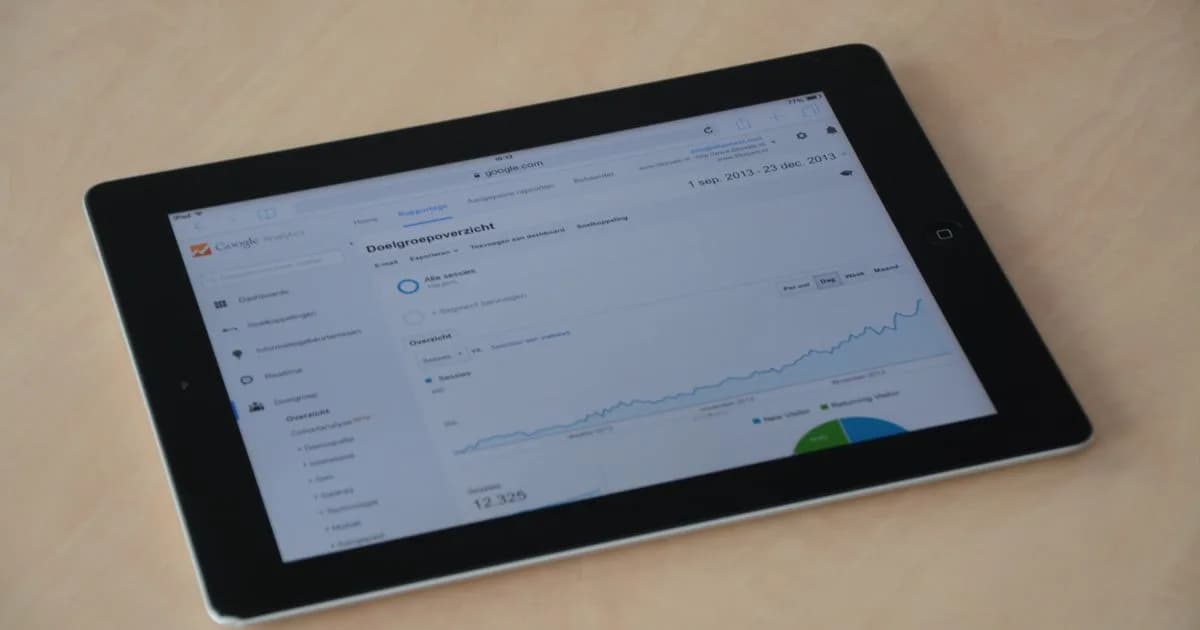
The key metric is not CTR or cost per click. It's ROAS (return on ad spend) and cost per qualified lead. A click that didn't become a lead, and a lead that didn't become money, is a cost — not a result.
If you can't trace the path from click to sale in GA4, you're not managing ads — you're just paying for them.
A simple starting framework by business type
- On-demand services (lawyer, repair, clinic, B2B service): start with Google Search. People look for you at the moment of a problem. Meta later, for brand and retargeting.
- E-commerce, visual products: start with Meta (+ Google Shopping/PMax once you have a feed). Impulse and imagery win.
- Local business (café, salon, studio): Meta for neighborhood reach + Google for branded and "near me" queries.
- New product nobody searches for: Meta only — there's no search demand yet, you have to create it.
- High-ticket B2B: Google Search on narrow commercial queries + LinkedIn if budget allows. Meta is weaker for expensive B2B.
Common budget-burning mistakes
- Launching without conversion tracking. You optimize blind and pay for clicks, not customers.
- Too small a budget across two channels at once. Neither exits learning. Better to run one channel fully.
- Conclusions after a week. Meta is still learning, Google is still gathering data. Minimum one month.
- Optimizing for clicks, not leads. A cheap click ≠ a cheap customer.
- One creative for everything. On Meta, creative is 70% of the result. A single banner burns out in 1–2 weeks.
- Ignoring negative keywords in Google. Without them you pay for irrelevant queries every day.
FAQ
Google Ads or Meta Ads — which should I choose for my business? If people already search for what you sell (services, B2B, local demand) — Google. If you have to spark the want with an image (e-commerce, visual products, new launches) — Meta. The rest is detail on that one difference.
Which is cheaper and which gives better ROI — Google or Meta? By cost per lead, usually Meta. But better ROI comes from the channel with the lower cost per customer, not per lead: in hot service demand Google often wins because leads convert higher. Count to ROAS, not to cost per click.
What budget should I start with? Minimum €300–500/mo on one channel to get honest data. Less than that and the test shows nothing. At €200/mo don't split across two channels — put it all on one.
Which to choose for B2B, e-commerce, and local services? B2B and on-demand services — Google Search, you catch ready demand. E-commerce and visual products — Meta (+ Shopping/PMax once you have a feed). Local services — Meta for neighborhood reach + Google for "near me" queries.
Should I run both channels at once? Only when the budget lets each exit the learning phase (from ~€300/mo per channel). Then the combo works: Google harvests hot demand, Meta creates new demand and closes with retargeting. On a small budget — one channel, fully.
How soon will I see results? First leads in days. A stable, optimized funnel takes 4–8 weeks, once there's enough data to optimize.
I set up Google Ads and Meta Ads for leads, not clicks — with GA4, conversion tracking, and ROAS reporting instead of impressions. Want a breakdown for your business? Message me — in 30 minutes I'll tell you which channel gets you customers cheaper.